

Are you looking for a simple way to boost your mood and clear your mind? Physical activity could be the key you’ve been missing.

Moving your body doesn’t just improve your fitness – it plays a powerful role in your mental health too. Imagine feeling less stressed, more focused, and happier just by adding a bit of exercise to your day. Keep reading to discover how physical activity can transform your mental well-being and why making it a regular habit is one of the best things you can do for yourself.
Mental Health Benefits Of Exercise

Exercise is not just good for the body; it is also great for the mind. Physical activity helps improve mental health in many ways. It can change how the brain works and how we feel every day.
People who exercise regularly often feel calmer and happier. It also helps the brain stay sharp and focused. These mental health benefits make exercise a simple and effective tool for better well-being.
Reducing Anxiety And Depression
Exercise lowers stress hormones in the body. It helps the brain produce chemicals that make you feel good. These changes reduce feelings of anxiety and depression.
Regular physical activity also improves sleep. Better sleep supports a calmer mind and fewer mood swings. It gives people more control over their emotions.
Boosting Mood And Happiness
Exercise releases endorphins, often called “feel-good” chemicals. These natural mood boosters make you feel happier. Even short workouts can brighten your day.
Being active also raises self-confidence. Achieving fitness goals creates a sense of pride. This positive feeling adds to overall happiness.
Enhancing Cognitive Function
Physical activity improves blood flow to the brain. This helps brain cells grow and connect better. It supports memory, learning, and problem-solving skills.
Exercise also protects the brain from aging. It lowers the risk of cognitive decline and diseases. Staying active keeps your mind sharp for longer.
Physical Activity And Stress Relief

Physical activity helps reduce stress by calming the mind and body. It offers a natural way to manage tension and anxiety. Moving your body changes how you feel and think. This leads to a clearer, more relaxed state of mind. Exercise creates balance in your mental health.
Lowering Stress Hormones
Exercise lowers levels of stress hormones like cortisol. High cortisol makes you feel anxious and tired. Physical activity helps the body release these hormones. At the same time, it raises endorphins, chemicals that improve mood. This balance helps reduce feelings of stress quickly.
Promoting Relaxation
Physical activity promotes relaxation by easing muscle tension. After exercise, muscles feel loose and less tight. This physical relief sends signals to the brain to calm down. Gentle exercises like walking or yoga boost this effect. Your mind becomes quieter and less restless.
Improving Sleep Quality
Good sleep is vital for managing stress. Exercise helps you fall asleep faster and sleep deeper. Better sleep restores energy and improves mood. Avoid intense workouts close to bedtime for best results. Regular activity builds a healthy sleep routine.
Exercise And Brain Health

Exercise does more than strengthen muscles and improve mood. It also plays a key role in brain health. Physical activity helps the brain stay sharp and flexible. It protects against mental decline and supports memory. This section explores how exercise benefits brain health.
Increasing Neuroplasticity
Neuroplasticity means the brain’s ability to change and grow. Exercise boosts this ability by encouraging new brain connections. These connections help the brain adapt to new experiences. Physical activity stimulates the production of brain chemicals that promote growth. This process supports learning and recovery from injuries.
Protecting Against Cognitive Decline
Regular exercise lowers the risk of cognitive decline. It helps keep brain cells healthy and reduces inflammation. Active people often show slower memory loss and clearer thinking. Exercise improves blood flow to the brain, providing more oxygen and nutrients. These effects protect the brain from age-related diseases like Alzheimer’s.
Supporting Memory And Learning
Exercise enhances memory by boosting brain cell growth in the hippocampus. This brain area controls memory and learning. Physical activity also improves focus and attention. Better blood flow and oxygen support brain functions needed for learning. Staying active helps keep the mind sharp and ready to absorb new information.
Social Benefits Of Physical Activity
Physical activity does more than improve your body. It also boosts your social life and mental health. Being active helps you meet new people and feel part of a group. These social benefits play a big role in keeping your mind healthy and happy.
Building Social Connections
Joining exercise classes or sports teams creates chances to meet others. Talking and sharing experiences during activities help you make new friends. These connections reduce stress and increase feelings of belonging.
Encouraging Teamwork And Support
Group sports teach cooperation and trust. Working toward a common goal builds strong bonds between teammates. Support from others during physical activity can improve your mood and motivation.
Reducing Feelings Of Isolation
Physical activity helps people feel less lonely. Being part of a group or community gives a sense of purpose. Regular interaction lowers anxiety and depression symptoms.
Creating Lasting Wellness Habits
Creating lasting wellness habits is key to improving mental health. Regular physical activity helps reduce stress and boost mood. Building these habits takes time and effort but offers great rewards.
Simple, steady changes in your daily routine help make activity a natural part of life. Consistency matters more than intensity. Small steps lead to big improvements in mental well-being.
Setting Realistic Goals
Start with goals that feel doable and clear. Avoid setting targets that seem too hard or too fast. For example, aim for a 10-minute walk each day rather than an hour of exercise right away.
Realistic goals build confidence and keep you moving forward. Adjust your goals as you improve. Celebrate small wins to stay encouraged.
Incorporating Activity Into Daily Life
Find ways to add movement throughout your day. Take stairs instead of elevators. Walk or bike to nearby places. Stretch during breaks at work or school.
These simple actions add up and help your body and mind. Making activity part of daily life prevents it from feeling like a chore.
Maintaining Motivation Over Time
Keep your interest by trying different activities. Join a group class or exercise with friends. Change your routine to avoid boredom.
Track your progress to see how far you’ve come. Remind yourself of the mental health benefits you gain. Staying motivated helps turn exercise into a lifelong habit.
Conclusion
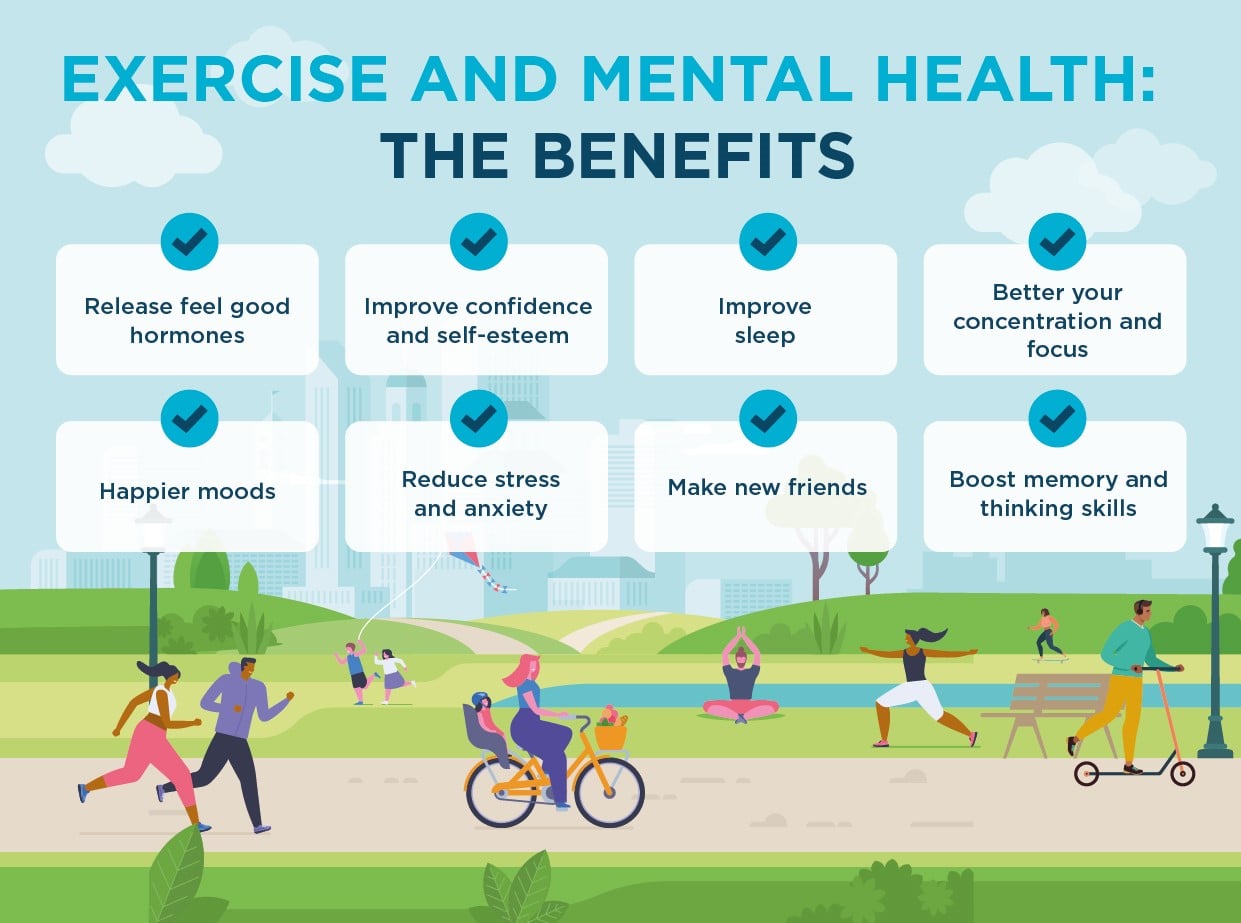
Physical activity helps your mind feel calm and clear. It reduces stress and lifts your mood quickly. Exercise improves sleep, which is good for mental health. It also boosts energy and sharpens focus. Small daily movements make a big difference over time.
You don’t need to do much to start feeling better. Just a few minutes can change how you think. Stay active to keep your mind strong and happy. Simple steps lead to lasting mental wellness. Why wait? Begin moving today for a healthier mind.